
Where to Find Your VIN, and Why We Always Ask for It
The 17-character VIN is the fastest way to get the right part for a German car. Here is where to find it on an Audi, VW, BMW or Mercedes and what it tells a parts counter.
Read guide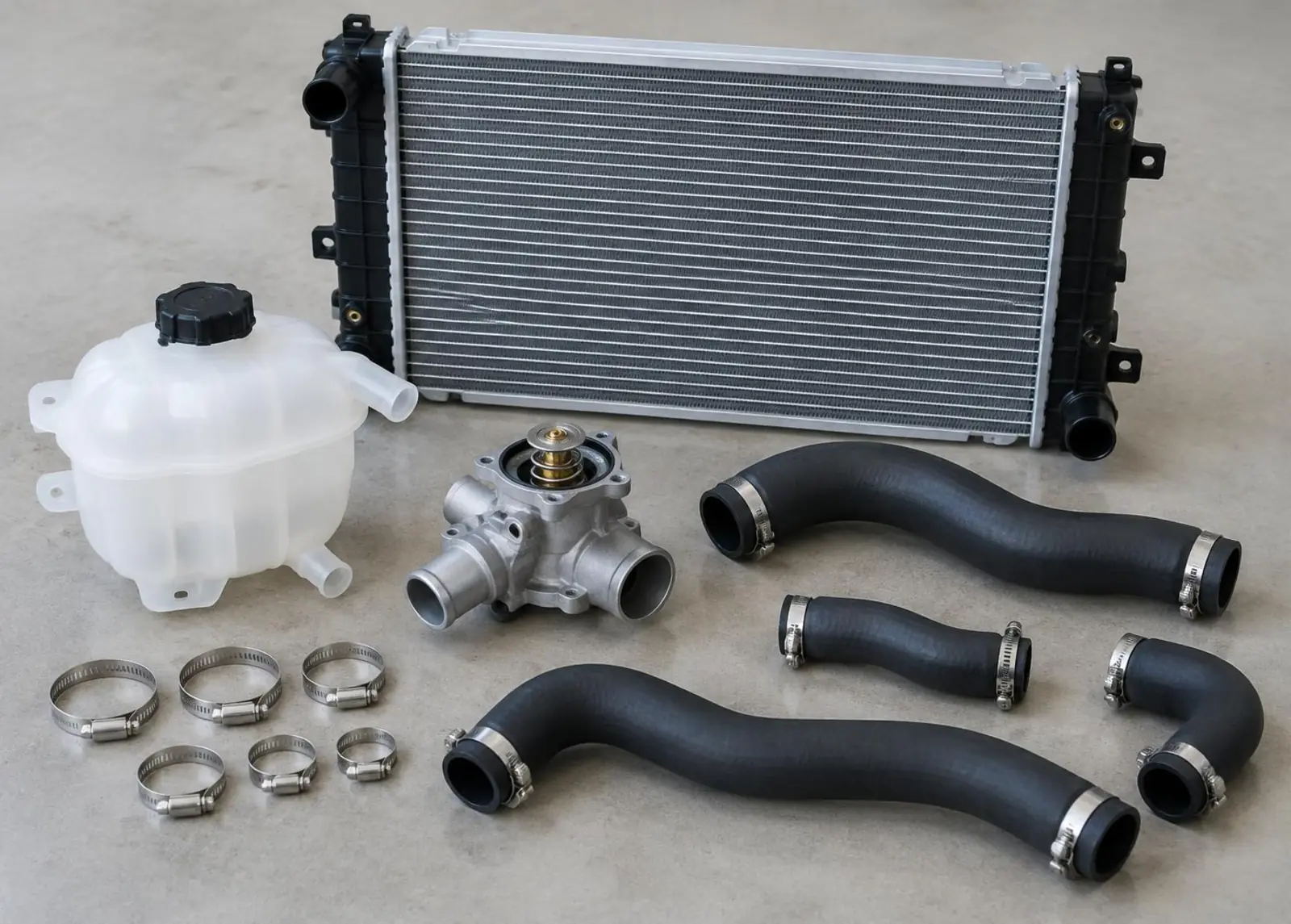
The EA888 turbocharged four-cylinder powers a huge number of Audi and Volkswagen models in the US, from the GTI and Jetta GLI to the A4, Q5 and Tiguan. It is strong and efficient. Its best-known weak point is the water pump and thermostat housing assembly, which is made of plastic and can crack or seep with heat cycles.
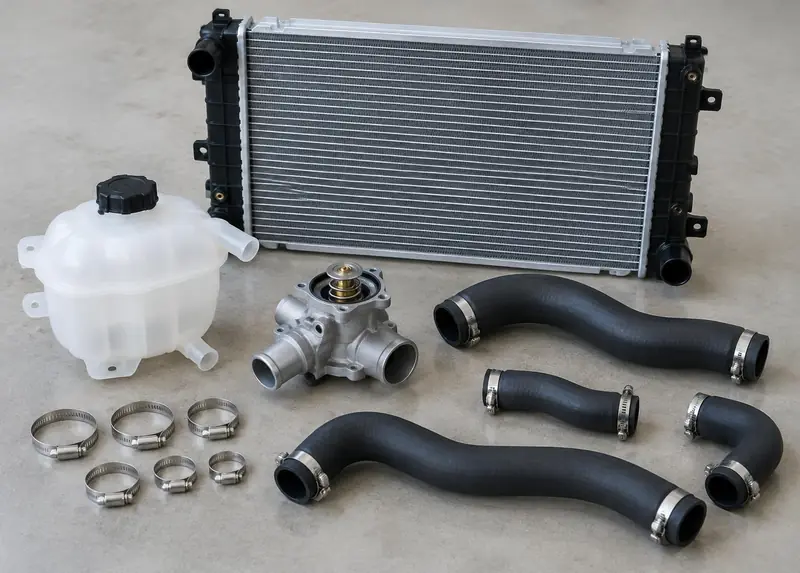
The design has been revised several times. We match the latest superseded part number to your VIN, so you get the updated version rather than old stock.
Do not keep topping up and driving. Turbocharged engines run hot, and an overheat can warp the cylinder head. Do not mix coolant types; use the specification for your car. And avoid "stop leak" additives, which can clog the small passages in the heater core and turbo cooling lines.
If you see any of the signs above, send us your VIN and a photo of the area. We will tell you what we think is leaking and quote the parts, usually the same business day.
This guide is general information. Always follow the manufacturer's service information for your specific vehicle. See our disclaimer.
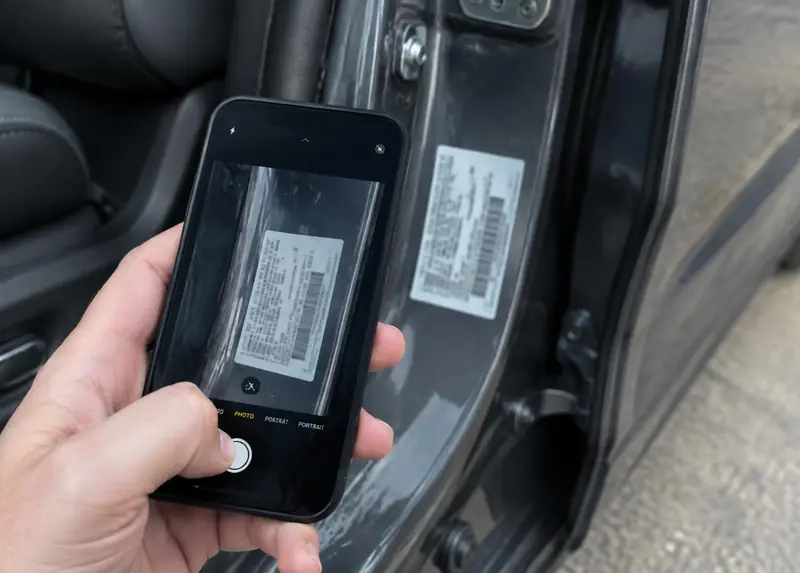
The 17-character VIN is the fastest way to get the right part for a German car. Here is where to find it on an Audi, VW, BMW or Mercedes and what it tells a parts counter.
Read guide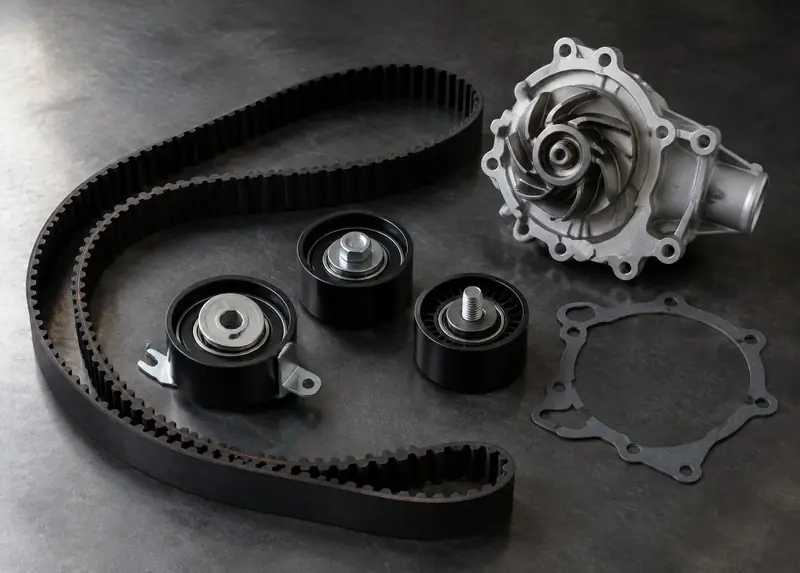
Which Audi and Volkswagen engines use a timing belt, which use a chain, and what that means for maintenance, cost and the parts you should replace at the same time.
Read guide
A straight explanation of genuine, OE, OEM-quality and aftermarket parts for European cars, with examples of when the cheaper option is fine and when it is not.
Read guide
Send a VIN and a short description. A parts specialist checks fitment and replies with a written quote, usually the same business day.