
Where to Find Your VIN, and Why We Always Ask for It
The 17-character VIN is the fastest way to get the right part for a German car. Here is where to find it on an Audi, VW, BMW or Mercedes and what it tells a parts counter.
Read guide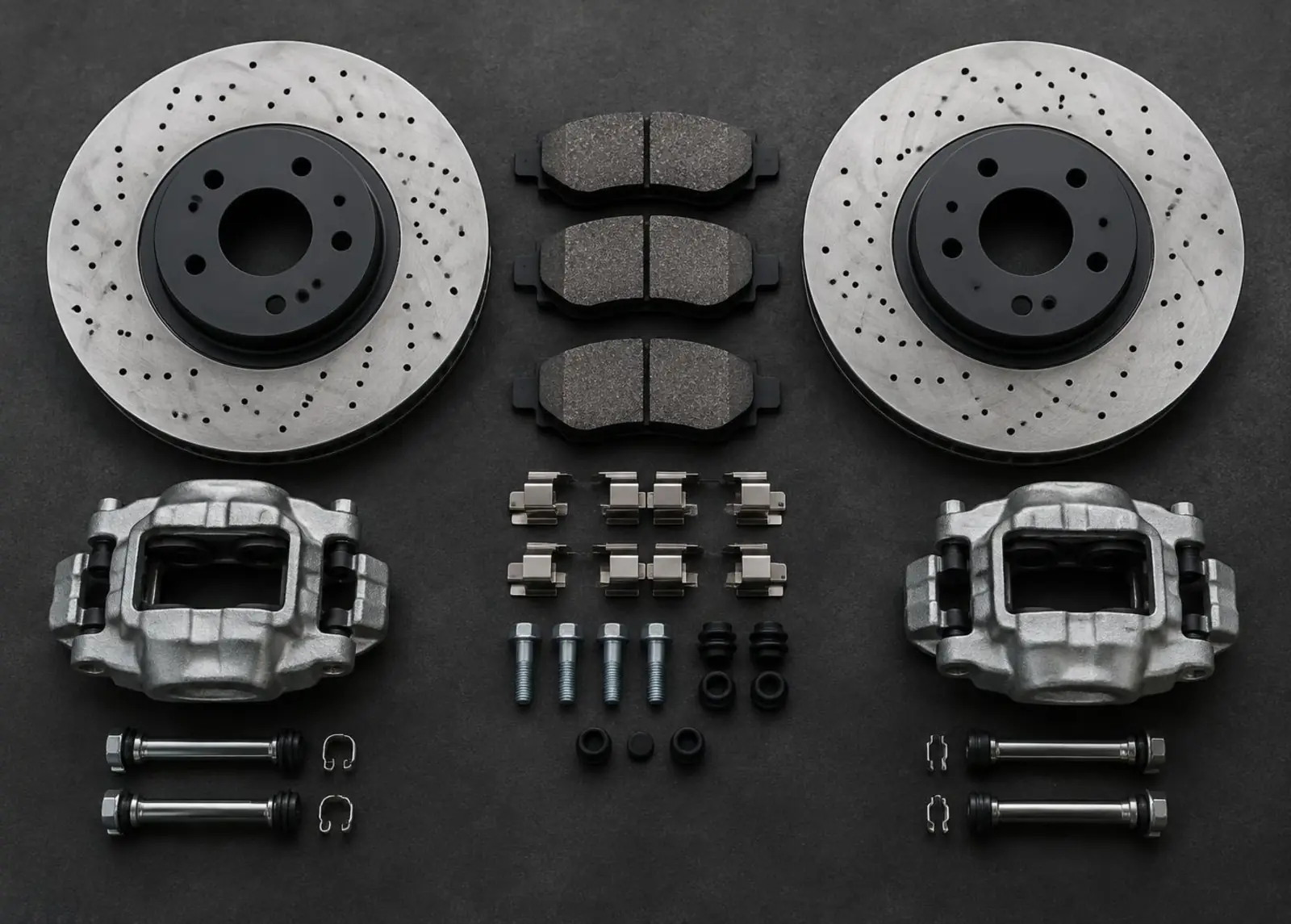
German cars are built to stop hard from high speed, and their brakes are designed to wear as a system. Pads are softer than on many domestic cars, which means good bite, more dust, and rotors that wear along with the pads. Here is what to know before you order.
Every rotor has a minimum thickness stamped on its edge or hat (for example "MIN TH 28"). On most European cars, by the time the pads are worn out the rotors are at or near that limit. Machining rotors is rarely worth it. For most of our customers, replacing pads and rotors as a pair per axle is cheaper over the life of the car.
Audi, VW, BMW, MINI and Mercedes use electronic pad wear sensors. Once the sensor has touched the rotor and triggered the warning, it is done. A new sensor costs little and saves you a warning light that will not go away. We include the correct sensor on every brake quote when your car uses one.
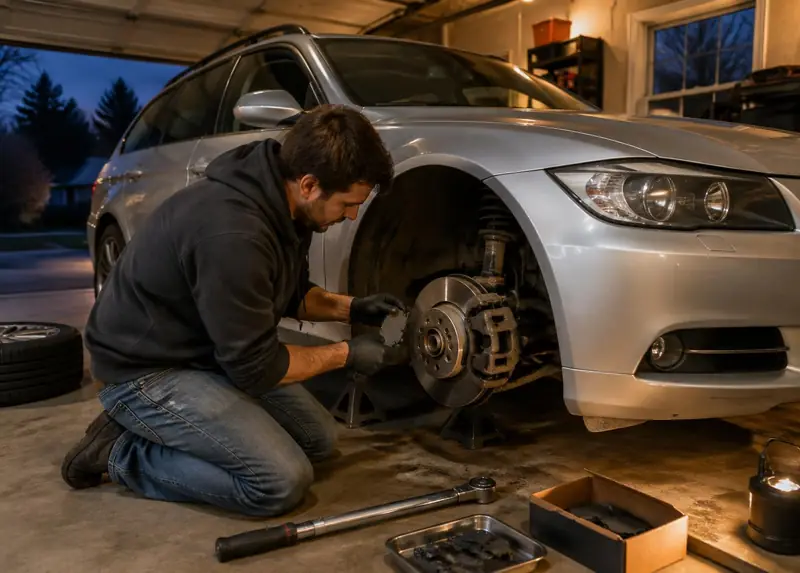
Many newer Audi and VW models, and most recent BMW and Mercedes models, have an electronic parking brake on the rear calipers. The caliper piston is driven by a small motor. Before the rear pads can be changed, the system must be put into service mode with a scan tool (VCDS, OBDeleven, ISTA or a good generic tool). Forcing the piston back by hand can damage the motor. If you do not have a tool, this is a job for a shop.
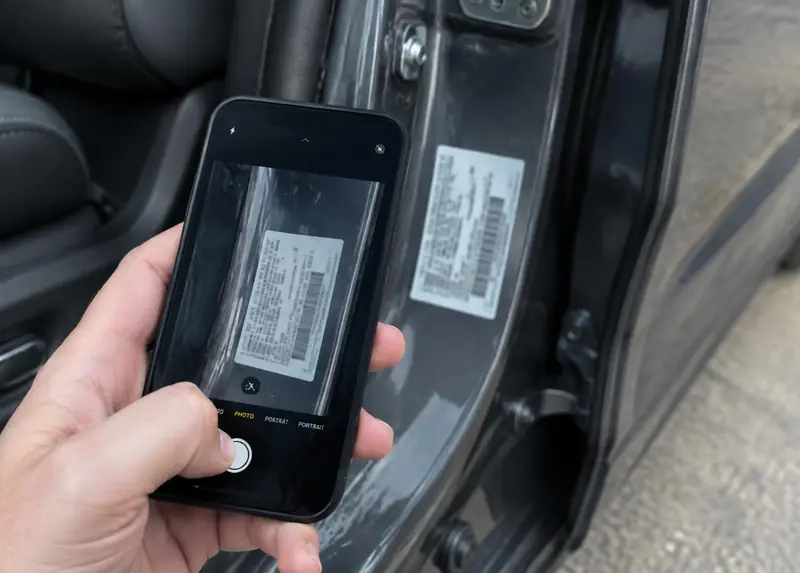
The same model can come with several front brake sizes depending on engine and options. Audi lists this as a PR code (for example 1LJ or 1ZK) on the vehicle data sticker. This is the most common reason people order the wrong rotors online, and it is exactly why we ask for your VIN.
New pads and rotors need a few controlled stops to transfer an even layer of pad material onto the rotor. A typical procedure:
Always follow the pad manufacturer's instructions if they differ.
A typical axle quote from us includes two rotors, a pad set, the wear sensor, and new hardware or bolts if the procedure calls for them. We commonly source from Zimmermann, ATE, Textar, Brembo and Pagid. See our brake parts overview or ask for a quote.
This guide is general information. Always follow the manufacturer's service information for your specific vehicle. See our disclaimer.
The 17-character VIN is the fastest way to get the right part for a German car. Here is where to find it on an Audi, VW, BMW or Mercedes and what it tells a parts counter.
Read guide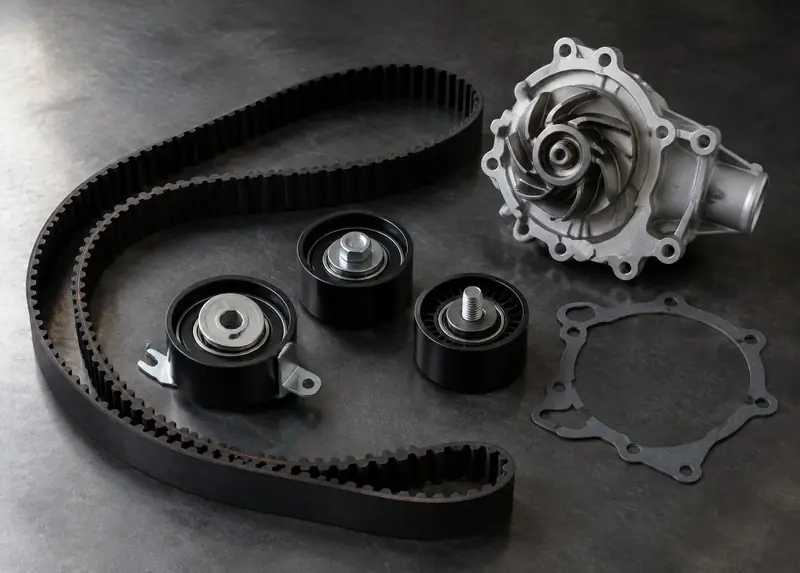
Which Audi and Volkswagen engines use a timing belt, which use a chain, and what that means for maintenance, cost and the parts you should replace at the same time.
Read guide
A straight explanation of genuine, OE, OEM-quality and aftermarket parts for European cars, with examples of when the cheaper option is fine and when it is not.
Read guide
Send a VIN and a short description. A parts specialist checks fitment and replies with a written quote, usually the same business day.